
Low Vision Awareness Month
When Vision Loss Isn’t Blindness
February Is Low Vision Awareness Month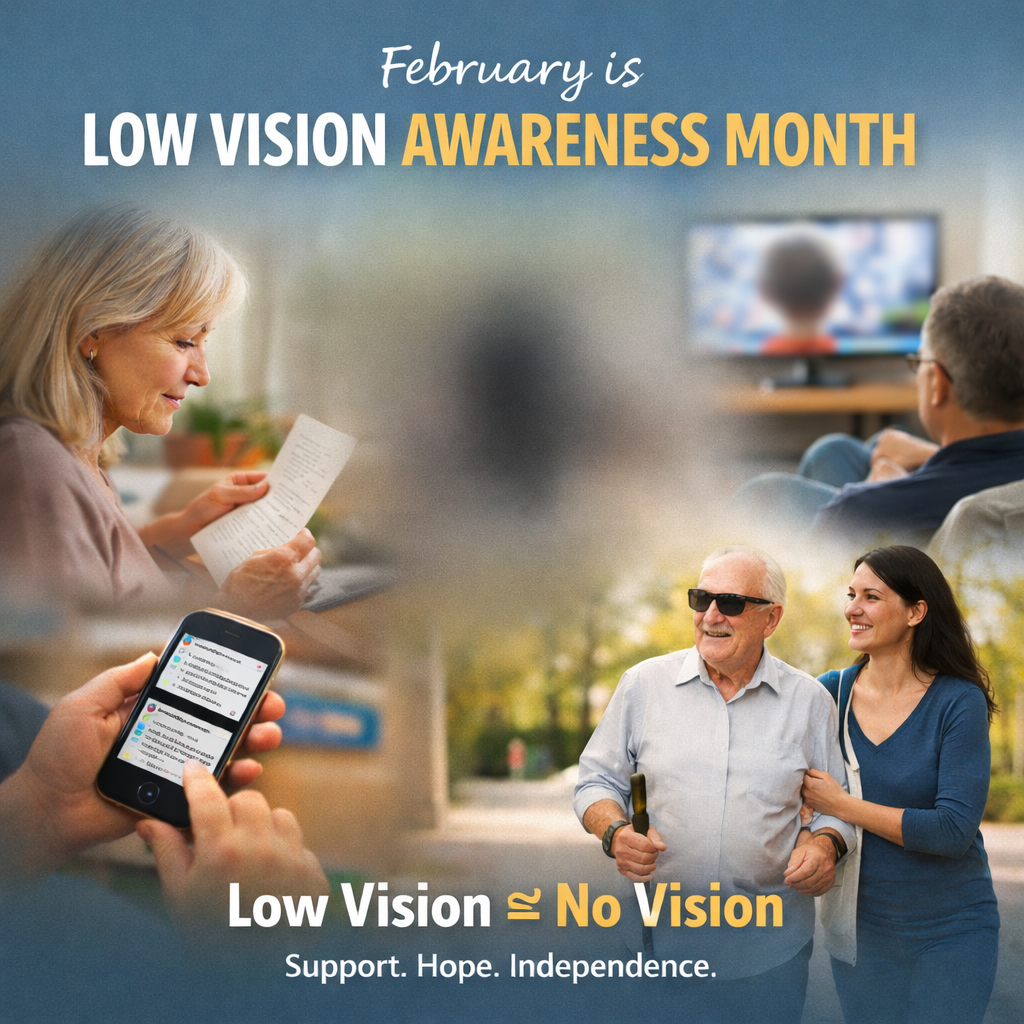
Low Vision Awareness Month is an important time to recognize a reality that affects millions of people—yet is still widely misunderstood.
Low vision is not blindness.
It refers to vision that cannot be fully corrected with standard glasses, contact lenses, medication, or surgery, and that interferes with daily activities such as reading, recognizing faces, driving, watching television, or navigating familiar environments.
For many individuals living with conditions such as age-related macular degeneration (AMD), glaucoma, diabetic eye disease, stroke-related vision loss, and inherited retinal disorders, the challenge is not a lack of vision—but a lack of awareness that help may still exist.
Understanding Life With Low Vision
Living With Low Vision
People with low vision often hear: “There’s nothing more that can be done.”
In reality, that statement is frequently incomplete. Low vision care focuses on functional vision—how a person uses their remaining sight to perform meaningful, everyday tasks. With the right expertise and individualized approach, many patients are able to regain independence and confidence, even years after their original diagnosis.
Bringing Awareness to Functional Vision Loss
Why Awareness Matters
Low vision is often invisible to others. Someone may still see well enough to move around, yet struggle silently with tasks most people take for granted. Awareness helps by:
- Encouraging patients and families to seek specialized care
- Educating the public that low vision is common and manageable
- Shifting the conversation from “vision loss” to vision potential
A Message of Hope
Low Vision Awareness Month is not only about education—it’s about possibility. Many individuals living with low vision can benefit from advanced, personalized vision care that goes far beyond routine eye exams. When care is centered on real-life goals and functional outcomes, patients often discover they have more options than they were led to believe.
If you or someone you love is struggling with vision that impacts daily life, this month serves as a reminder:
Low vision does not mean no vision—and it does not mean the end of independence.